
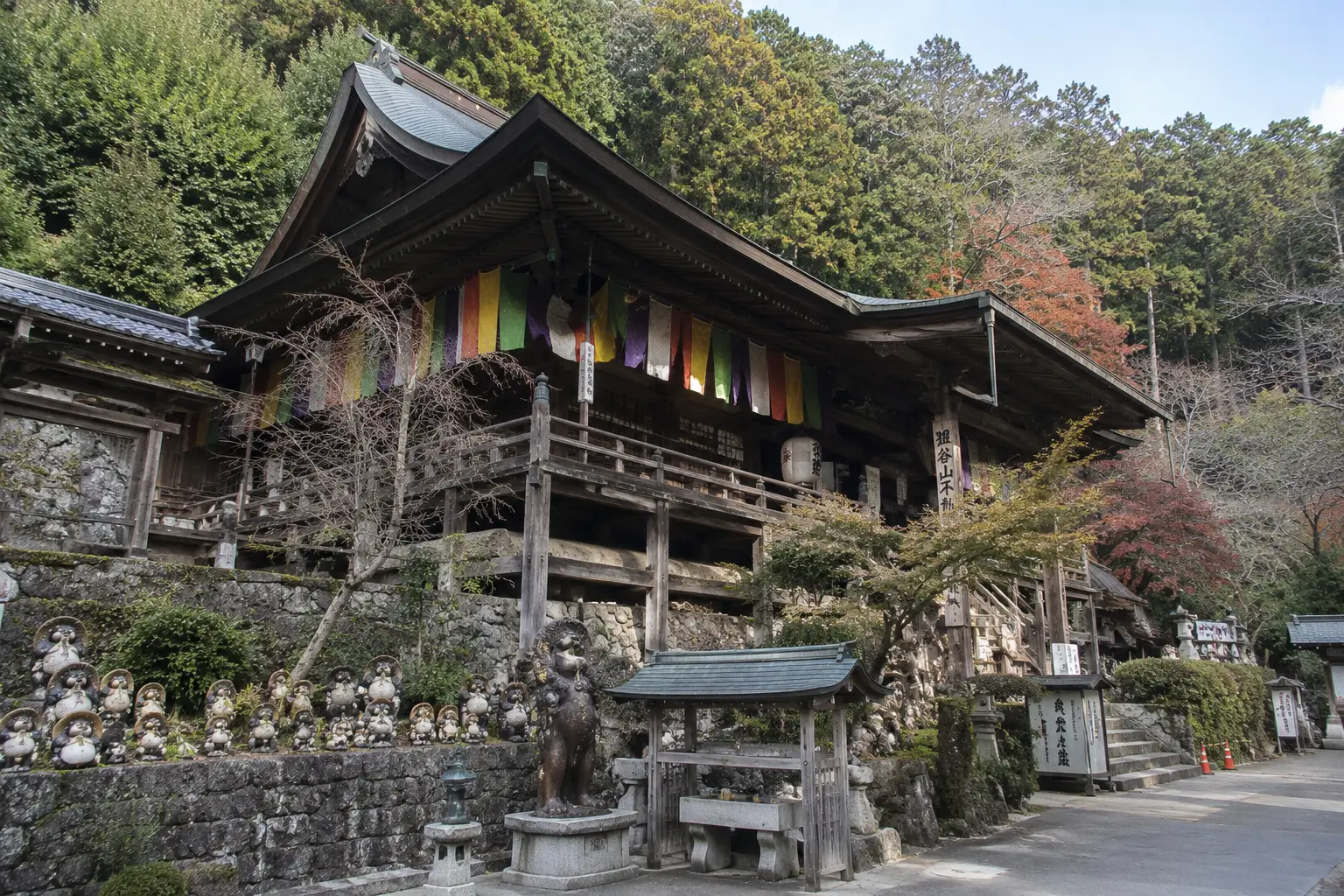
The Hidden Cliffside Temple of Ascetic Power in Kyoto
For many travelers, Kyoto is synonymous with the iconic wooden stage of Kiyomizu-dera. However, the sheer volume of global tourism often masks the true spiritual solitude that these sacred spaces were meant to provide. Nestled deep within the forested mountains of northeastern Kyoto lies a powerful, lesser-known sanctuary: Tanukidani-san Fudoin. Offering breathtaking architecture and profound historical energy without the overwhelming crowds, this temple stands as a testament to Japan’s living mountain asceticism.
The Architecture of Devotion: The Dramatic Cliffside Stage
The defining feature of Tanukidani-san Fudoin is its magnificent main hall (Hondo), constructed in the Kengai-zukuri (Suspended Veranda) style—the exact same architectural technique utilized by Kiyomizu-dera. Rather than resting on flat ground, the temple is masterfully engineered to project directly over a steep, verdant ravine, supported by a dense matrix of interlocking wooden beams.
Reaching this sacred precipice is a pilgrimage in itself. Visitors must ascend approximately 250 stone steps that wind through a silent, atmospheric cedar forest guarded by hundreds of stone statues of Tanuki (mythical Japanese raccoon dogs, symbolizing overcoming obstacles). Upon reaching the summit, the panoramic view from the wooden stage is breathtaking, offering an intimate, visceral connection with the raw landscape of Kyoto’s northern mountains.
The Legacy of Might: Miyamoto Musashi and the Sacred Waterfall
Unlike the gentle elegance found in lowland temples, Tanukidani-san Fudoin radiates a rigorous, austere energy. It belongs to the Shugendo tradition—a syncretic faith combining mountain worship, Shinto, and Buddhism centered on spiritual empowerment through physical endurance.
Deep within the temple grounds flows the Shinshaku-no-taki (Sacred Waterfall). It was beneath this torrential mountain stream that the legendary master swordsman, Miyamoto Musashi, is said to have undergone intense isolated training before his historic duel with the Yoshioka clan. Today, the waterfall remains a focal point for modern pilgrims, and travelers can still feel the palpable, solemn focus that drew Japan’s greatest warrior to this specific mountain crease centuries ago.
Access Information
Tanukidani-san Fudoin is located in the Ichijoji district of Kyoto. While it feels completely removed from the urban sprawl, it is highly accessible via public transportation. Taking a taxi from the nearest rail terminal is highly recommended due to the steep terrain leading to the entrance.
| Transportation Mode | Route & Instructions |
|---|---|
| By Train & Taxi (Recommended) | Take the Eizan Electric Railway from Demachiyanagi Station to Ichijoji Station (approx. 6 minutes). From Ichijoji Station, we highly recommend taking a Taxi directly to the temple entrance (approx. 5–7 minutes, around 1.5 km uphill). Alternatively, it is a 20-minute steep walk from the station. |
| By City Bus | From Kyoto Station or central district, board the Kyoto City Bus Route 5 and alight at the “Ichijoji Sagarimatsu-cho” bus stop. From the bus stop, the temple entrance is approximately a 15-minute walk uphill through a scenic residential valley leading into the mountains. |
Traveler’s Note: Because the path from the bus stop or train station involves a steady incline followed by 250 steps, please ensure you wear sturdy walking shoes. The journey through the forest is an integral part of the spiritual experience.
Embracing the Silent Mountain Energy
Tanukidani-san Fudoin offers an invaluable alternative for those seeking the architectural majesty of Kyoto without the compromising distractions of mass tourism. Here, the air is sharper, the history is written in stone and water, and the ancient spirit of Japanese craftsmanship remains undisturbed. It is a profound sanctuary where one does not merely look at history, but feels the very heartbeat of the mountain.