
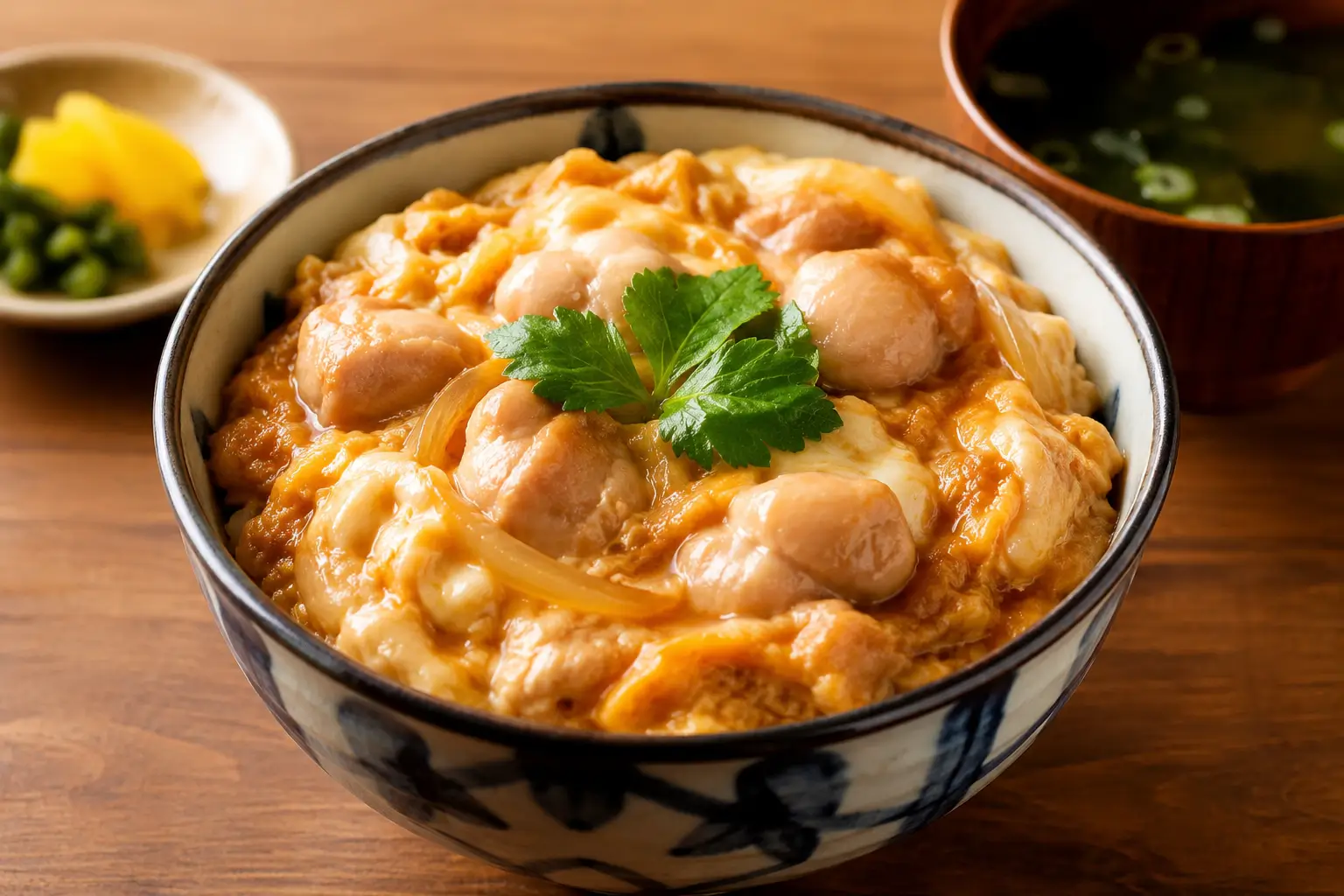
The Edible Microcosm of Japan’s Unified Culinary Art
In global gastronomy, structural balance is frequently achieved by separating components across multiple platters. However, Japan’s most brilliant contribution to everyday high-speed culinary art takes the exact opposite approach. Donburi—affectionately referred to as “Don”—is a monumental dining concept where a single, deep porcelain bowl functions as a complete, self-contained culinary theater. By layering meticulously prepared proteins and vegetables directly over a steaming bed of premium rice, Donburi represents an edible microcosm. For international travelers, unlocking this cuisine reveals how Japanese culture beautifully synthesizes luxury, efficiency, and comforting local identity.
The Blueprint: Premium Rice and the Science of Sauce Absorption
The material foundation of any master-tier Donburi is not actually the headline topping, but the underlying layer of Gohan (Japanese short-grain rice). The rice is polished and steamed to a precise density where each grain remains structurally independent, yet soft and elastic.
This rice bed acts as a structural sponge. When the hot toppings are layered above, a specialized, sweet-savory soy-based sauce known as Tare trickles downward. The volume of this sauce is calculated mathematically by the chef; it must lightly coat the middle layer of the rice to infuse it with umami, without accumulating at the absolute bottom of the ceramic bowl. This thermodynamic interaction ensures that every single spoonful delivers a flawless, unified ratio of grain, sauce, and protein simultaneously.
The Genesis of Efficiency: From Edo Fast Food to the Domestic Table
The historical evolution of Donburi reflects Japan’s transition into a dynamic, modern society. For centuries, traditional formal dining (Honzen Ryori or Kaiseki) dictated that rice and side dishes must be kept entirely separate to maintain purity. However, during the bustling **Edo Period ($1603\text{–}1867$)**, as merchants, theater-goers, and laborers demanded highly efficient, hot meals that could be consumed rapidly, urban food stalls began breaking tradition.
The earliest commercial variant was Ten-don (tempura over rice), serving as the ultimate functional street food. Today, in the daily life of Japanese households, Donburi is celebrated as a versatile, democratic staple. It bridges the gap between casual comfort and seasonal luxury. Families utilize the format both for efficient, nutrient-dense weeknight dinners and as a celebratory vehicle for displaying premium local harvests.
The Typological Spectrum: Exploring Japan’s Diverse Bowls
One of the most magnificent aspects of Donburi culture is its immense diversity across different Japanese terroirs. Because any local specialty can be elevated when placed over rice, the Donburi map serves as an exceptional tool for travelers wishing to venture away from overcrowded metropolitan zones:
| Donburi Variety | Core Material | Cultural & Regional Context |
|---|---|---|
| Gyu-don | Thinly Sliced Beef & Onions | Simmered in a sweet dashi-mirin sauce. It stands as the quintessential, modern urban fuel of Japan’s working class, perfected for absolute consistency and speed. |
| Katsu-don | Pork Cutlet & Simmered Egg | A crispy, panko-breaded cutlet flash-cooked with dashi, sweet onions, and a velvety wash of raw egg. Celebrated domestically as a comforting, high-energy meal consumed for good fortune. |
| Kaisen-don | Assorted Raw Seafood | The absolute crown jewel of regional dispersion. Pristine, seasonal slices of raw tuna, scallop, sea urchin, and salmon roe are arranged like jewels, showcasing the maritime bounty of coastal prefectures like Hokkaido or Tohoku. |
| Oyako-don | Chicken & Egg | Literally translating to “Parent and Child Bowl.” It features tender chunks of local chicken simmered gently with fluffy, half-cooked eggs, representing the ultimate, unadulterated minimalist comfort food. |
The Protocol of the Bowl: Authentic Consumption Etiquette
To fully appreciate a masterfully prepared Donburi and dine like a seasoned cultural insider, global travelers should observe these traditional parameters:
- The No-Mixing Rule: A Japanese Donburi is fundamentally different from a Korean Bibimbap or a Western grain bowl. You must never mix the entire bowl together into a chaotic paste. Instead, eat downward systematically from the top, picking up a specific portion of the topping along with the pristine vertical section of rice directly beneath it. This preserves the delicate contrast of textures and temperatures until the very last bite.
- Lifting the Vessel: In Japanese dining etiquette, leaving a deep bowl flat on the table and leaning your face down toward it is considered ungraceful. You are highly encouraged to physically lift the bowl with your non-dominant hand, bringing the rim closer to your chest while using your chopsticks or spoon to smoothly guide the food.
- The Wasabi Placement: When enjoying a raw seafood Kaisen-don, never dissolve your green Wasabi directly into your small dish of soy sauce until it turns cloudy. Instead, place tiny dabs of raw wasabi directly onto individual slices of fish, lightly drizzle your custom soy sauce over the bowl, and consume.
A Sacred Symphony of Simplicity and Depth
The Japanese Donburi stands as a magnificent testament to the nation’s culinary engineering—proving that true luxury does not require an endless progression of formal courses. By consolidating the terroir of local oceans, mountains, and rice paddies into a singular, beautiful ceramic vessel, Japan has created the ultimate democratic masterpiece. For any global explorer seeking the authentic, beating heart of local food culture, breaking through the steaming surface of a regional Donburi is an indispensable cultural pilgrimage.