
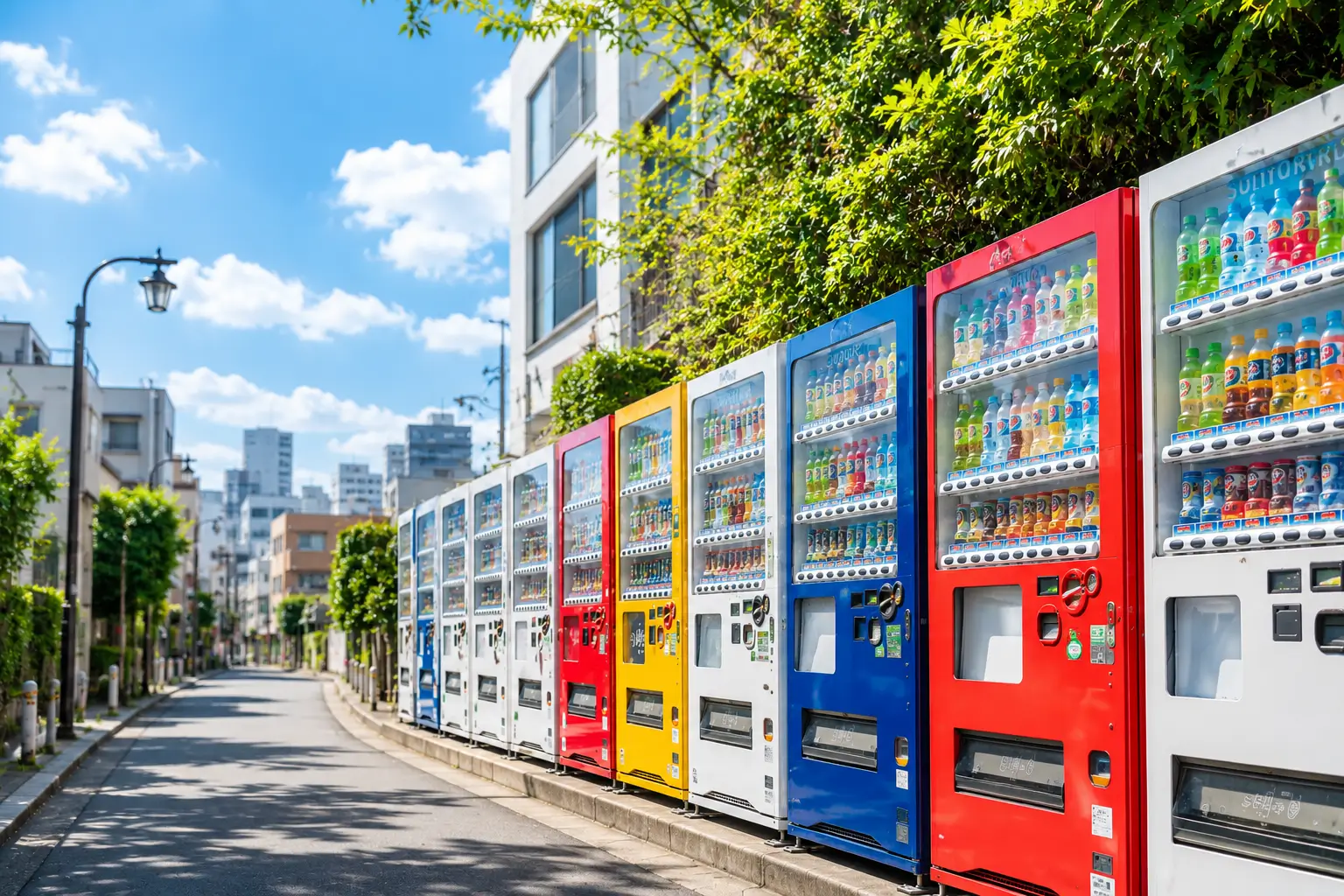
The Silent Masterpiece of Japanese Hospitality and Street Culture
In most global metropolises, automated dispensing machines are treated with a degree of utilitarian caution—frequently fortified behind heavy iron bars, placed strictly indoors, or limited to standard ambient snacks. However, upon stepping into any quiet alleyway from Tokyo to the rural borders of Hokkaido, international travelers encounter a completely different phenomenon. Jidohanbaiki (Japanese vending machines) stand proudly unprotected on almost every street corner. Functioning as a pristine, illuminated oasis of liquid comfort, these machines represent a silent masterpiece of domestic engineering and absolute societal trust, offering a deeply fascinating lens into Japan’s daily lifestyle.
The Technic Blueprint: Unrivaled Thermodynamic Precision
What elevates the Japanese Jidohanbaiki from a simple mechanical dispenser into an elite piece of street infrastructure is its invisible, highly advanced thermodynamic engineering. The defining characteristic of these machines is their ability to dispense scorching hot and ice-cold beverages simultaneously from the exact same conceptual unit.
The system is color-coded with absolute mathematical clarity for the consumer:
- Blue Labeling (つめたい – Tsumetai): Indicates an ice-cold beverage, chilled precisely to around $5^\circ\text{C}$ to maximize refreshing clarity during humid summers.
- Red Labeling (あたたかい – Atatakai): Indicates a steaming hot beverage, maintained consistently at approximately $55^\circ\text{C}$ to $60^\circ\text{C}$ to provide instant thermal relief during the freezing winter months.
Modern machines utilize eco-intelligent heat-recycling technology. The thermal energy extracted from cooling the blue-labeled beverages is not discarded into the atmosphere; instead, it is internally redirected to warm the red-labeled cans, creating a highly sustainable, silent loop of continuous energetic efficiency.
The Monument of Trust: Cultural Genesis and the Safety Paradigm
The historical integration of vending machines into the Japanese landscape accelerated rapidly during the high-economic growth period of the **1960s and 1970s**. The turning point arrived with the introducing of the $100\text{-yen}$ coin, coupled with the mass commercialization of canned coffee. As long-distance commuting became the norm for the nation’s workforce, these machines emerged as essential, lightning-fast hydration hubs.
In the everyday life of a Japanese neighborhood, the Jidohanbaiki is an absolute indicator of the nation’s world-class public safety (Chian). The fact that thousands of machines filled with physical currency and premium products remain completely unvandalized in dark, unmonitored rural lanes is a profound testament to communal respect. They serve not just as commercial tools, but as vital neighborhood lanterns that illuminate dark residential walkways at night, contributing actively to local safety and peace of mind.
The Typological Spectrum: From Canned Coffee to Regional Treasures
While standard machines focus primarily on green teas and soft drinks, the Jidohanbaiki universe features incredible diversity. Exploring specialized variations serves as an exceptional tool for travelers wishing to venture away from crowded commercial districts into regional Japan:
| Product Category | Core Offerings | Cultural Context & Nuance |
|---|---|---|
| Canned Coffee | Black, Latte, Espresso | A massive industrial subculture. Premium brands utilize high-grade beans packaged in pressurized aluminum cans, allowing busy office workers to enjoy a barista-quality hot caffeine fix in under three seconds. |
| Gastronomic Soups | Corn Potage, Dashi, Miso | Served steaming hot in aluminum cans during autumn and winter. Some specialized machines in regional stations even dispense entire bottles of premium flying-fish dashi broth containing whole pieces of kelp for domestic home cooking. |
| Retro & Local Foods | Udon, Burgers, Fresh Fruit | The ultimate target for decentralized tourism. Tucked away in rural highway rest stops, vintage 1970s machines still cook hot, fresh udon noodles or dispense perfectly chilled, sliced local apples within seconds, preserving nostalgic postwar mechanics. |
The Protocol of the Machine: Transaction Mechanics and Etiquette
To interact with these modern marvels seamlessly and respect the local street aesthetic, global travelers should observe these foundational parameters:
Step-by-Step Transaction Flow
- Payment Insertion: Insert your physical currency (coins ranging from $10\text{–}500\text{ yen}$ or $1,000\text{-yen}$ bills) or simply tap your digital transit IC card (such as Suica or Pasmo) against the illuminated reader.
- Selection Confirmation: The digital or physical buttons beneath your desired beverage will illuminate. Press firmly. You will hear the satisfying mechanical tumble of the product descending into the bottom cradle.
- Change Retrieval: Retrieve your beverage, and ensure you flip the metallic coin lever to collect any remaining physical currency from the lower tray.
Crucial Street Manners and Recycling Safeguards
The Recycling Coexistence Rule: In Japan, walking down the street while actively consuming food or beverages (Aruki-nomi) is considered unrefined. It increases the risk of accidental spills on historic structures or fellow pedestrians. You are highly encouraged to consume your beverage completely while standing stationary directly next to the machine.
- The Dedicated Disposal Port: Immediately adjacent to every Jidohanbaiki, you will find a specialized recycling structure with two circular ports. These are exclusively for empty cans, plastic bottles, and glass bottles purchased from the machines. Never attempt to force standard household trash, plastic bags, or food wrappers into these receptacles, as doing so disrupts the pristine municipal recycling matrix.
A Silent Symphony of Unchanging Reliability
The Japanese Jidohanbaiki stands as a beautiful, daily reflection of the nation’s core philosophy—where advanced technology never replaces human consideration, but rather automates it to ensure comfort is accessible to anyone, anywhere, at any hour. By pausing in a quiet, mist-shrouded alleyway to press an illuminated button for a hot cup of green tea, you transcend basic commercial consumption. You are actively participating in an elite, historic ritual of trust and structural perfection that defines the very soul of modern Japan.