
Published: May 2026 | Category: Culinary Heritage & Culture
While sushi and tempura represent the elegant artistry of Japanese fine dining, there is another dish that commands unparalleled affection within the country’s borders. It is thick, aromatic, and deeply comforting: Japanese Curry (カレー, Karē). Far removed from its ancestral roots in India, this highly adapted dish has become an absolute cornerstone of modern Japanese identity, frequently cited alongside ramen as one of the nation’s true modern national dishes.
Ingredients and Flavor Profile: Velvety, Sweet, and Savory
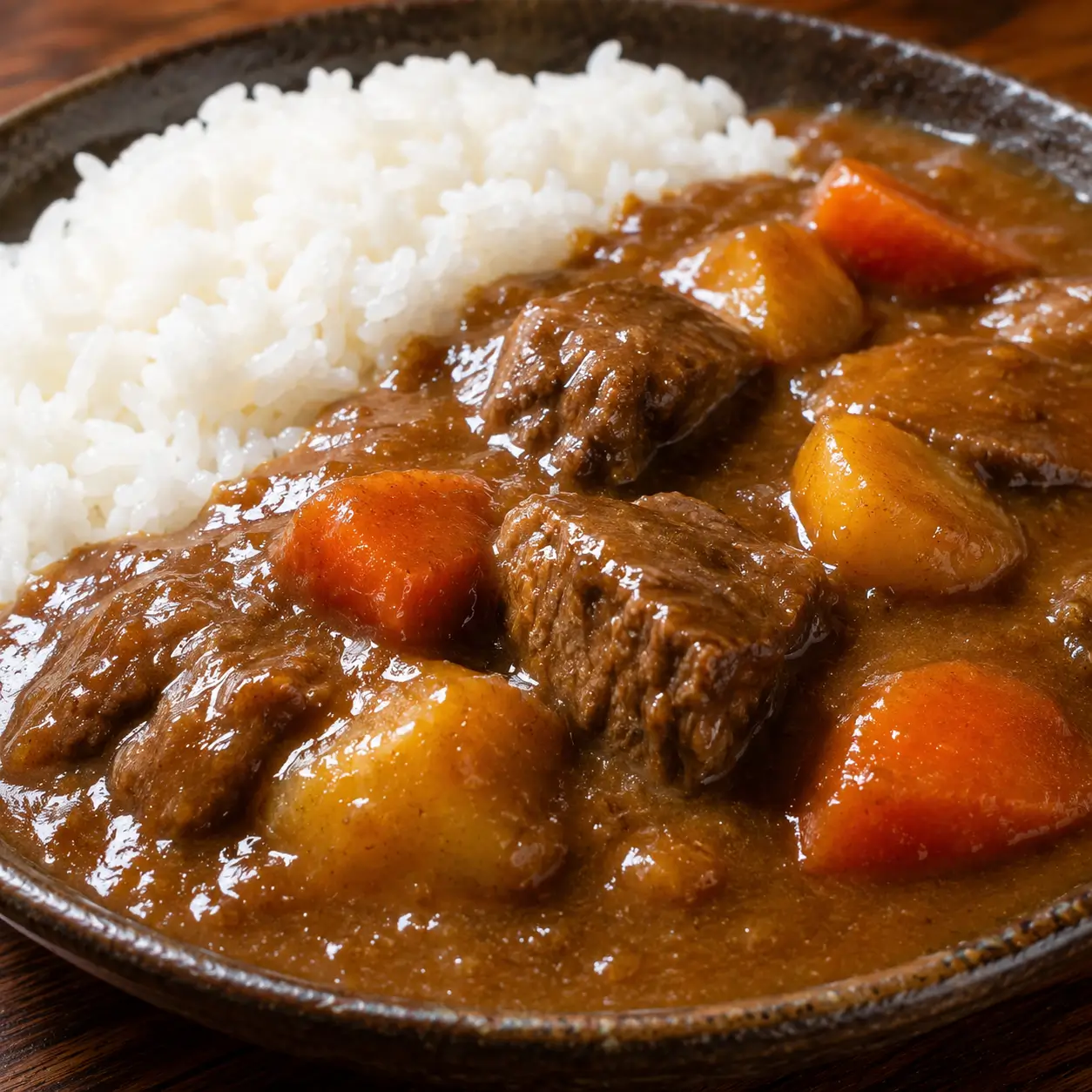
Unlike the bright, herb-infused, or fiery profile of Indian or Thai curries, Japanese curry is distinctly thick, rich, and mildly spiced. The classic foundation relies on a trio of humble vegetables: onions, carrots, and potatoes, simmered slowly with a choice of protein—most commonly beef, pork, or chicken.
The defining texture and flavor come from a fat-and-flour-based roux infused with a balanced blend of classic spices (including turmeric, coriander, and cumin). Crucially, Japanese curry masters introduce subtle sweet and umami undertones by incorporating grated apples, honey, caramelized onions, or even a splash of soy sauce. The resulting sauce is velvety and glossy, designed perfectly to cling to short-grain, sticky Japanese white rice rather than sink into it.
The Maritime Route: How Curry Arrived via Great Britain
The history of Japanese curry features a fascinating geopolitical twist: it did not arrive in Japan directly from India, but rather via the British Royal Navy during the late 19th-century Meiji Restoration. In that era, the British military used curry powder to flavor stews, thickening the broth with flour so it wouldn’t spill on rocky ships at sea.
When Japan established its own Imperial Navy, it adopted this thick, nutritious, and easily mass-produced curry stew to combat vitamin deficiencies among sailors. The recipe was a massive success. When these sailors completed their military service and returned to their home prefectures across Japan, they brought the beloved recipe with them, introducing it to the civilian population where it spread rapidly nationwide.
The Versatility of Karē: Three Essential Manifestations
The Japanese culinary imagination did not stop at serving curry solely over white rice. Today, the flavor profile exists in three legendary variations:
1. Karē Raisu (カレーライス) — Curry Rice
The absolute gold standard. A generous ladle of thick curry sauce poured over a bed of steaming white rice, traditionally served with a large spoon rather than chopsticks.
2. Karē Udon (カレーうどん) — Curry Noodles
A magnificent hybrid dish where the thick curry roux is thinned down and harmonized with traditional Japanese dashi (fish and kelp broth). Thick, chewy wheat noodles are submerged in this fragrant soup, offering a deeply comforting, multi-layered savory experience.
3. Karē Pan (カレーパン) — Curry Bread
A favorite staple of Japanese bakeries. A savory yeast roll filled with concentrated curry paste, coated in crunchy Panko breadcrumbs, and deep-fried to golden perfection. It represents the ultimate portable comfort food.
The Crimson Companion: Fukujinzuke
Just as burger restaurants rely on pickles to cut through richness, a plate of Japanese curry is considered incomplete without its signature garnish: Fukujinzuke (福神漬け).
Named after the Seven Lucky Gods of Japanese folklore, this relish consists of finely chopped vegetables—including daikon radish, lotus root, and eggplant—pickled in soy sauce and sugar, often tinted a vibrant crimson red. Its sweet, intensely sweet-tart flavor and remarkably crunchy texture provide a vital, refreshing contrast to the velvety, heavy nature of the curry sauce.
Curry on the Japanese Home Dining Table
While dishes like Sukiyaki represent special celebrations, Curry sits at the absolute opposite end of the spectrum: it is the ultimate, ubiquitous everyday comfort food. It is cheap, universally loved by children and adults alike, and remarkably easy to prepare in massive quantities.
The explosion of curry’s domestic popularity can be traced directly to the invention of commercial solid curry roux blocks in the 1950s. These convenient, foil-wrapped blocks allow home cooks to instantly thicken and flavor a pot of simmered vegetables into a perfect curry in minutes. As a result, curry appears on the weekly dinner rotation of nearly every household in the country.
There is also a deeply rooted cultural phenomenon known as “Mikka-me no Karē” (Third-day Curry). Japanese families intentionally cook massive pots of curry because the flavor profile improves dramatically after sitting in the refrigerator overnight. As the ingredients rest, the starches break down, the vegetables melt into the sauce, and the spices mature, making a leftover bowl of curry the ultimate, nostalgic symbol of home-cooked warmth.
“Japanese curry is a masterclass in culinary adaptation. By taking a British naval interpretation of an Indian staple and refining it to suit the local palate, Japan created an enduring, soulful dish that defines the modern domestic table.”