
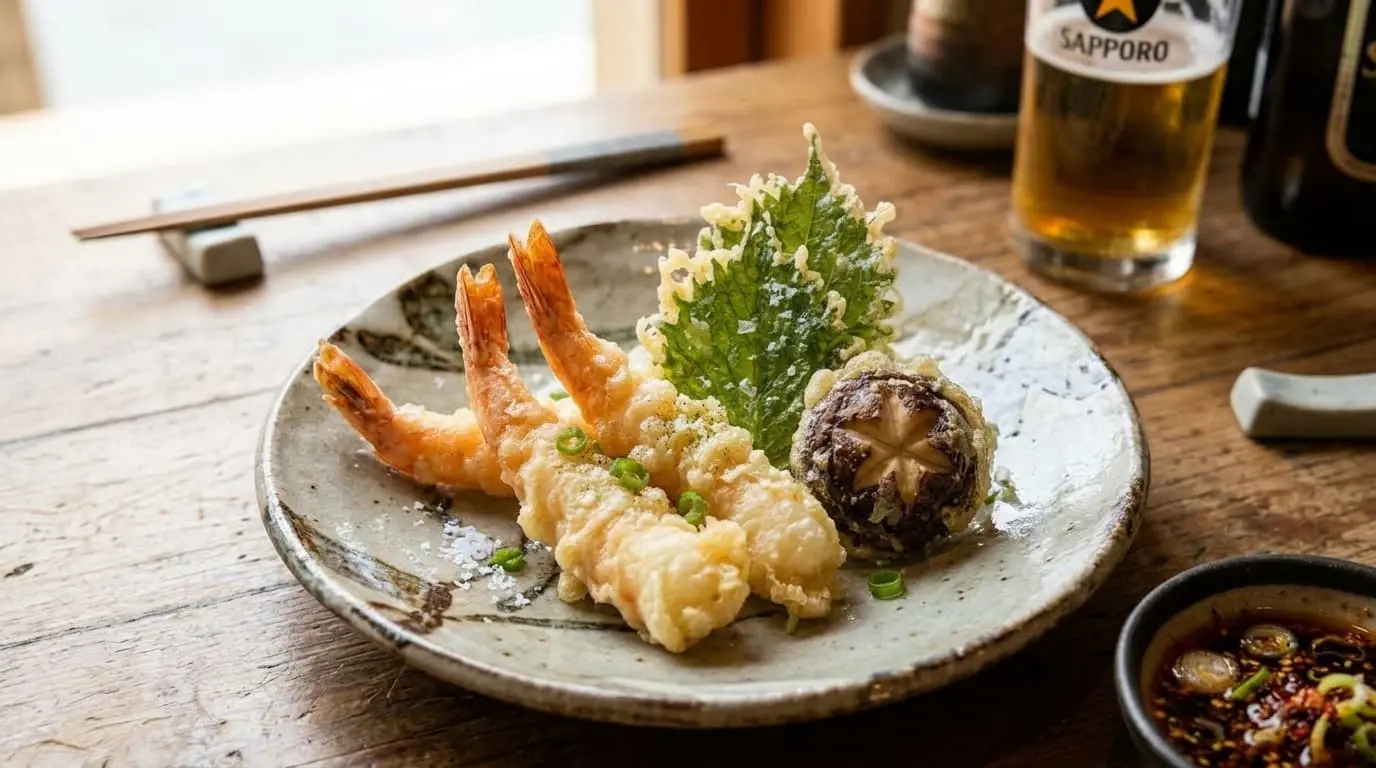
What Is Tempura? Japan’s Light, Crispy Fried Food Explained
Tempura is one of the first dishes most visitors to Japan try — and one of the most misunderstood. It looks like simple fried food, but good tempura is a precise, delicate craft, built around an impossibly light, crisp batter that lets the ingredient underneath shine through rather than drowning it in grease.
From humble tempura counters to high-end tempura-only restaurants where chefs fry each piece to order in front of you, this dish spans the full range of Japanese dining, from casual to exquisite.
A Dish With Foreign Roots
Unlike many “classic” Japanese foods, tempura didn’t originate in Japan. It’s believed to have been introduced by Portuguese traders and missionaries in the 16th century, who brought with them a style of batter-frying food that was common in Europe at the time. The word “tempura” itself is thought to come from the Latin/Portuguese “tempora,” referring to the fasting periods when Catholics ate fried fish and vegetables instead of meat.
Over the following centuries, Japanese cooks refined the technique into something distinctly their own — lighter, crisper, and far less oily than its European ancestor.
What Makes Tempura Batter So Light
The hallmark of great tempura is its batter: thin, pale, and almost lace-like once fried, rather than thick and golden-brown like Western-style fried food. A few techniques make this possible:
- Ice-cold batter — the batter is mixed with ice water right before frying, which limits gluten development and keeps the coating light
- Minimal mixing — the batter is stirred just enough to combine, leaving it slightly lumpy, which creates a delicate, uneven crust
- Precise oil temperature — typically fried at a relatively moderate 160–180°C (320–355°F), hot enough to crisp quickly without over-browning
- Immediate serving — tempura is meant to be eaten within moments of frying, while the crust is still audibly crisp
What Gets Tempura-Fried
Tempura isn’t limited to one ingredient — part of the appeal is the variety on a single plate. Common items include:
- Shrimp (ebi) — the most iconic tempura ingredient, often the centerpiece of a set
- White fish, such as whiting or snapper
- Vegetables, including sweet potato, pumpkin (kabocha), lotus root, shiso leaf, and green beans
- Mushrooms, like shiitake
- Kakiage, a mixed fritter of small shrimp and shredded vegetables bound together and fried as one piece
How Tempura Is Served and Eaten
Tempura typically comes with one of a few accompaniments, depending on the setting:
- Tentsuyu — a light dipping sauce made from dashi, soy sauce, and mirin, usually served with grated daikon radish to cut the richness
- Salt — at more refined tempura restaurants, a pinch of flavored salt (sometimes matcha salt or citrus salt) is used instead of sauce, letting the ingredient’s flavor come through more directly
- Tempura rice bowls (tendon) — tempura served over rice with a savory-sweet sauce drizzled on top
- Tempura udon or soba — a piece or two of tempura added to a bowl of noodle soup
Where to Try It
You’ll find tempura at nearly every level of Japanese dining:
- Specialty tempura restaurants, including counter-style spots where a chef fries each piece individually and serves it to you directly
- Soba and udon shops, where tempura is a common topping or side
- Department store basements and bento shops, for quality tempura to go
- Izakayas, as a shared appetizer
Why It’s Worth Seeking Out
Because tempura relies so heavily on technique and timing, quality varies enormously — a mass-produced, pre-fried version bears little resemblance to tempura fried fresh at a dedicated counter. For travelers, seeking out a proper tempura specialist, even just once, is one of the clearest ways to understand why this “simple” fried food has held such a respected place in Japanese cuisine for centuries.