
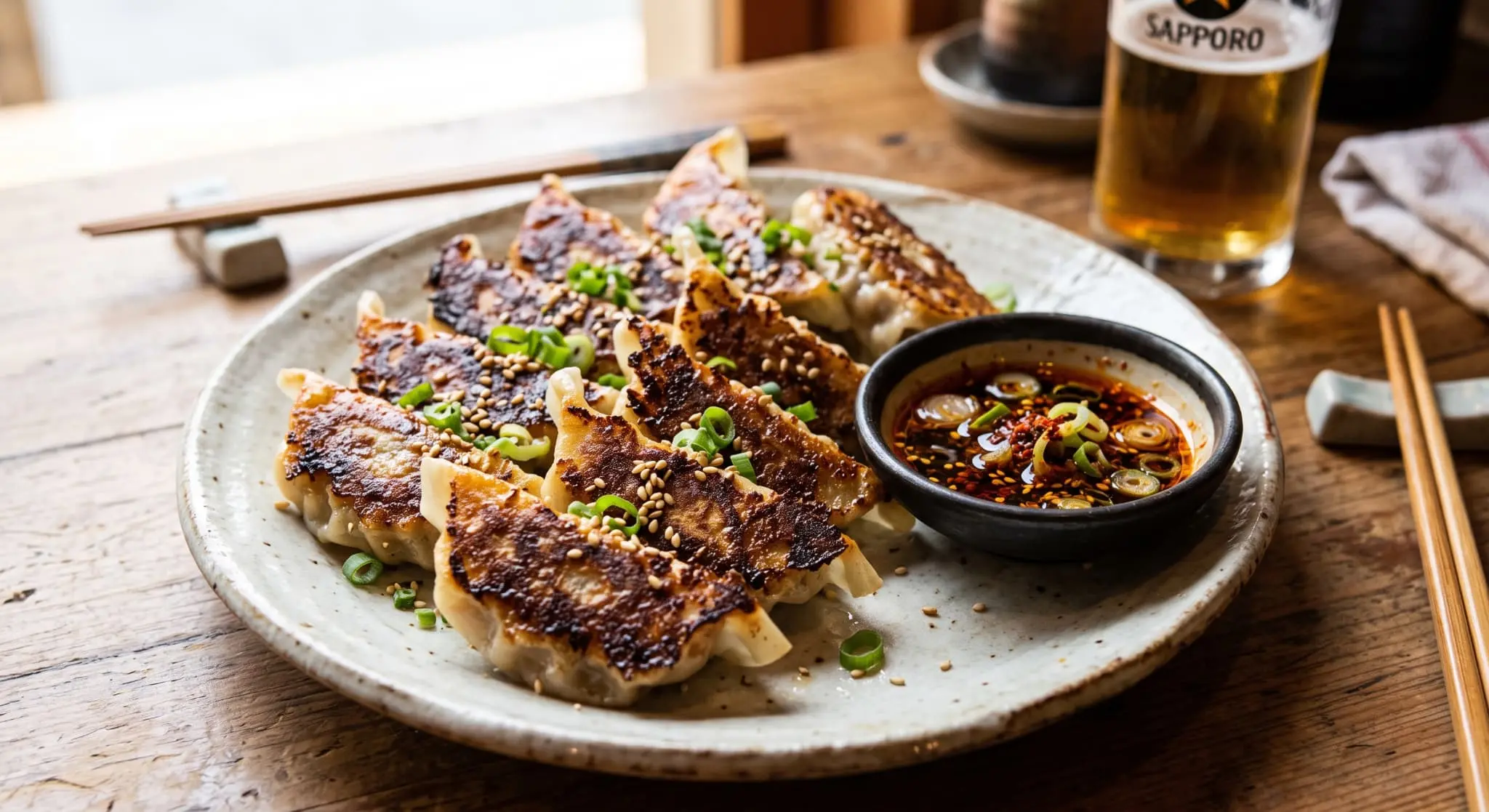
What Is Gyoza? Japan’s Beloved Dumpling, Explained
If you’ve spent any time exploring Japanese food beyond sushi and ramen, you’ve almost certainly come across gyoza — small, pan-fried dumplings filled with minced meat and vegetables, served in neat rows with crispy golden bottoms. They’re a staple at ramen shops, izakayas, and dedicated gyoza specialty restaurants all over the country, and they’re one of the easiest Japanese dishes for first-time visitors to fall in love with.
But despite how “Japanese” gyoza feels today, its story is actually a journey from China, through postwar Japan, into something uniquely its own.
Where Gyoza Comes From
Gyoza is Japan’s adaptation of the Chinese dumpling jiaozi. It’s widely believed that Japanese soldiers and civilians returning from northern China after World War II brought the dish back with them, and it quickly took root in cities like Utsunomiya and Hamamatsu — both of which are now famous “gyoza cities” with their own friendly rivalry over which makes it best.
Over the decades, the Japanese version evolved its own identity: lighter on garlic than some Chinese styles, wrapped in a thinner skin, and almost always cooked using the pan-fried method rather than boiled or steamed, which is more common in China.
The Classic Style: Yaki-gyoza (Pan-Fried Gyoza)
When people in Japan say “gyoza,” they almost always mean yaki-gyoza, the pan-fried version. The cooking method is part of what makes it so distinctive:
- Dumplings are lined up flat-side down in a hot, oiled pan
- Once the bottoms turn golden and crisp, a small amount of water is added and the pan is covered, steaming the tops and filling
- The lid comes off to let the remaining water evaporate, re-crisping the bottom
- The result: a dumpling that’s crunchy on one side and soft and juicy on the other
This contrast in texture — crispy bottom, tender top, savory filling — is the signature experience of eating gyoza in Japan.
What’s Inside
A standard filling combines finely minced pork with cabbage, garlic, ginger, and nira (Chinese chives), seasoned simply with soy sauce, sesame oil, and a touch of salt and pepper. The vegetables release moisture as they cook, keeping the filling juicy inside its thin wheat-flour wrapper.
While pork is the traditional base, modern gyoza menus across Japan often include variations such as:
- Vegetable gyoza for vegetarian diners
- Shrimp gyoza
- Chicken gyoza, a lighter alternative to pork
- Regional or creative versions using local specialty ingredients, from wagyu beef to seasonal vegetables
How to Eat Gyoza
Gyoza is almost always served with a dipping sauce you mix yourself at the table, typically a combination of:
- Soy sauce
- Rice vinegar
- Rayu (chili oil), for a spicy kick
A small dish and the three condiments are usually placed on the table, letting you adjust the balance of salty, tangy, and spicy to your own taste. Dip the crispy side in lightly, and eat gyoza hot, straight off the pan, for the best texture.
Where You’ll Find It
Gyoza shows up almost everywhere in Japan’s food scene:
- Ramen shops — gyoza is the near-universal side order alongside a bowl of ramen
- Izakayas (Japanese pubs) — a popular shared plate to go with drinks
- Dedicated gyoza restaurants — entire menus built around different gyoza varieties, often found in food alleys and local dining streets
- Convenience stores and supermarkets — frozen gyoza is a beloved home-cooking staple across the country
A Simple Dish Worth Seeking Out
Gyoza is unpretentious, inexpensive, and deeply satisfying — exactly the kind of food that rewards curious travelers willing to step off the main tourist track and into a local ramen shop or a tucked-away gyoza counter. Once you’ve had a plate of properly pan-fried, crispy-bottomed gyoza in Japan, it’s hard to look at the frozen supermarket version back home the same way again.