
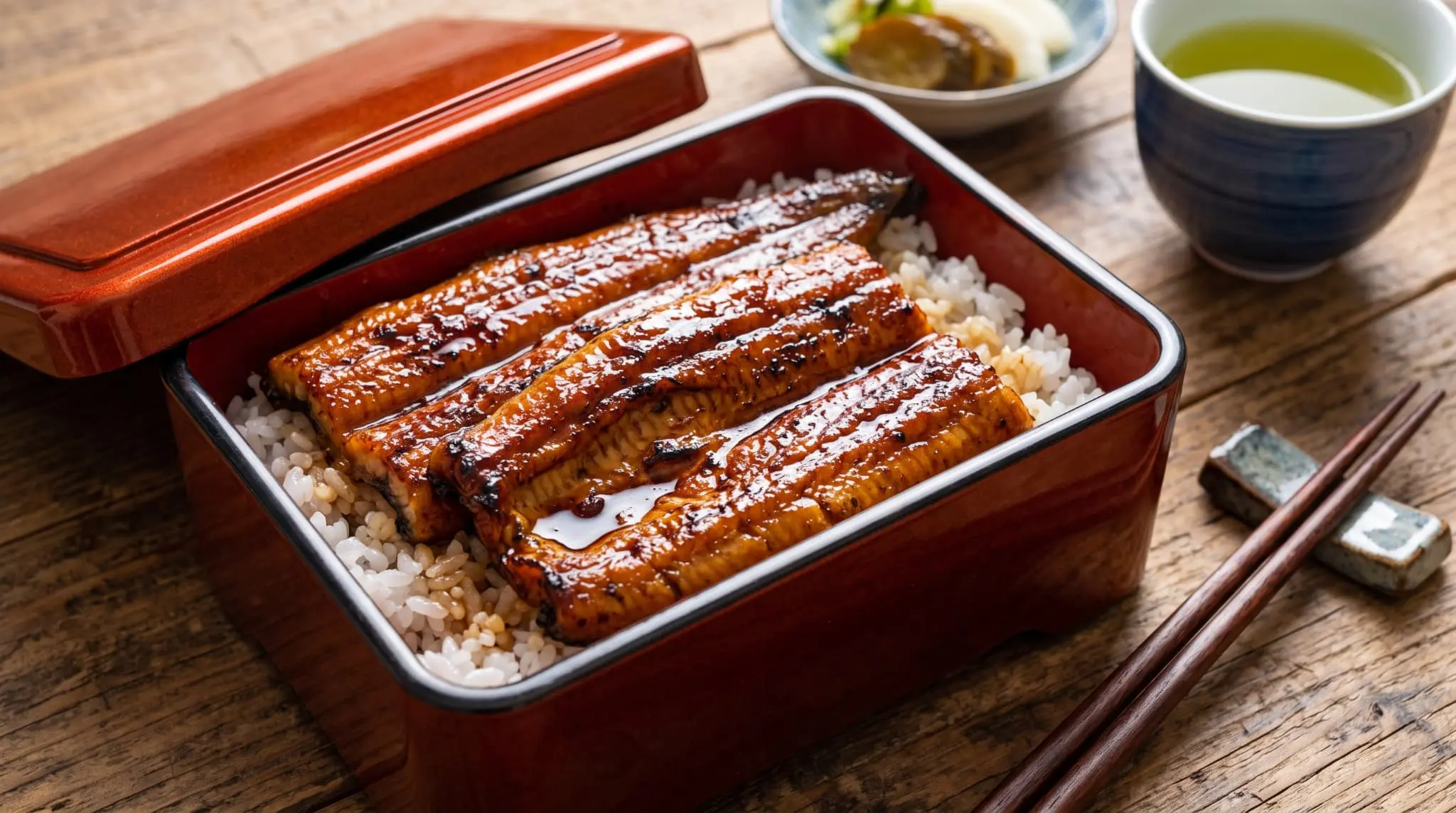
What Is Unagi? Japan’s Grilled Eel Explained
Unagi — freshwater eel, grilled and glazed in a sweet-savory sauce — is one of Japan’s most prized summer foods and one of its most surprising for first-time visitors. The idea of eating eel can give some travelers pause, but one bite of properly prepared unagi, with its smoky char, rich fat, and tender, almost custardy texture, usually wins people over immediately.
A Dish Rooted in Tradition
Unagi has been eaten in Japan for over a thousand years, but it became closely associated with summer thanks to a clever piece of Edo-period marketing: eel was traditionally thought to help people cope with the exhausting heat and humidity of Japanese summers, rich in protein and vitamins at a time when appetites tend to fade. Today, eating unagi on Doyo no Ushi no Hi (the “Day of the Ox,” a specific day in midsummer) remains a nationwide custom, with unagi restaurants seeing their busiest day of the year.
How Unagi Is Prepared
Preparing unagi properly takes years to master, and the process differs noticeably between regions:
- Splitting and deboning — the live eel is skillfully butterflied and deboned by hand, a skill traditionally said to take years to learn
- Kabayaki style — the eel is skewered, grilled, and repeatedly dipped in a sweet soy-based sauce (tare) made from soy sauce, mirin, and sugar, building up layers of glaze with each pass over the grill
- Regional differences — in the Kanto (Tokyo) region, eel is typically steamed before grilling, producing a softer, more delicate texture; in the Kansai (Osaka) region, it’s usually grilled directly without steaming, giving it a crisper, firmer bite
The result is a glistening, deep-brown fillet with a distinctive sweet-savory aroma that’s instantly recognizable.
Classic Ways Unagi Is Served
Unagi is most commonly served over rice, in a few standard formats:
- Unaju — grilled eel served in a lacquered box over rice, often considered the more formal presentation
- Unadon — the same idea served in a rice bowl rather than a box, slightly more casual
- Hitsumabushi — a Nagoya specialty where the eel is chopped and served over rice, meant to be eaten three different ways: plain, with condiments like nori and wasabi, and finally with dashi broth poured over it like a light soup
Pickled vegetables and a bowl of clear soup (often made with eel liver) are the traditional accompaniments.
Why Unagi Can Be Expensive
Unagi is often one of the pricier items on a Japanese menu, for a few genuine reasons:
- Eel cannot currently be fully farmed through its whole life cycle, so supply depends partly on wild-caught juvenile eels (glass eels), which fluctuate in availability
- Preparation is highly skilled and labor-intensive, often requiring years of training
- Demand spikes sharply around the midsummer Day of the Ox tradition
Because of these supply pressures, eel populations have also become a conservation concern, and some unagi restaurants and suppliers now highlight more sustainably sourced options.
Where to Try It
Dedicated unagi restaurants, often recognizable by the smoky smell of grilling eel drifting into the street, are the best place to experience it properly — some have been run by the same family for generations, slow-grilling eel over charcoal using a sauce recipe that’s been topped up and reused for decades. Unagi also appears in department store food halls and bento boxes, though the quality and price point vary significantly from a traditional specialty restaurant.
A Dish Worth the Splurge
Unagi isn’t an everyday meal for most people in Japan either — it’s a dish reserved for special occasions, celebrations, and that one midsummer tradition. For travelers willing to spend a bit more, a proper sit-down meal at an established unagi restaurant offers a genuine taste of a food tradition that’s been refined in Japan for centuries.