
Published: May 2026 | Category: Culinary Heritage & Culture
When international travelers imagine Japanese dining, images of individual portions served in minimalist aesthetics often come to mind. However, the true heartbeat of Japanese culinary gathering is found in Nabemono (communal hotpot dining), and its undisputed crown jewel is Sukiyaki (すき焼き). Featuring marbling ribbons of premium beef simmered in a rich, sweet-savory soy broth, Sukiyaki is a sensory ritual that beautifully reflects Japan’s deep appreciation for seasonal ingredients and shared hospitality.
Ingredients and Flavor Profile: A Symphony of Umami
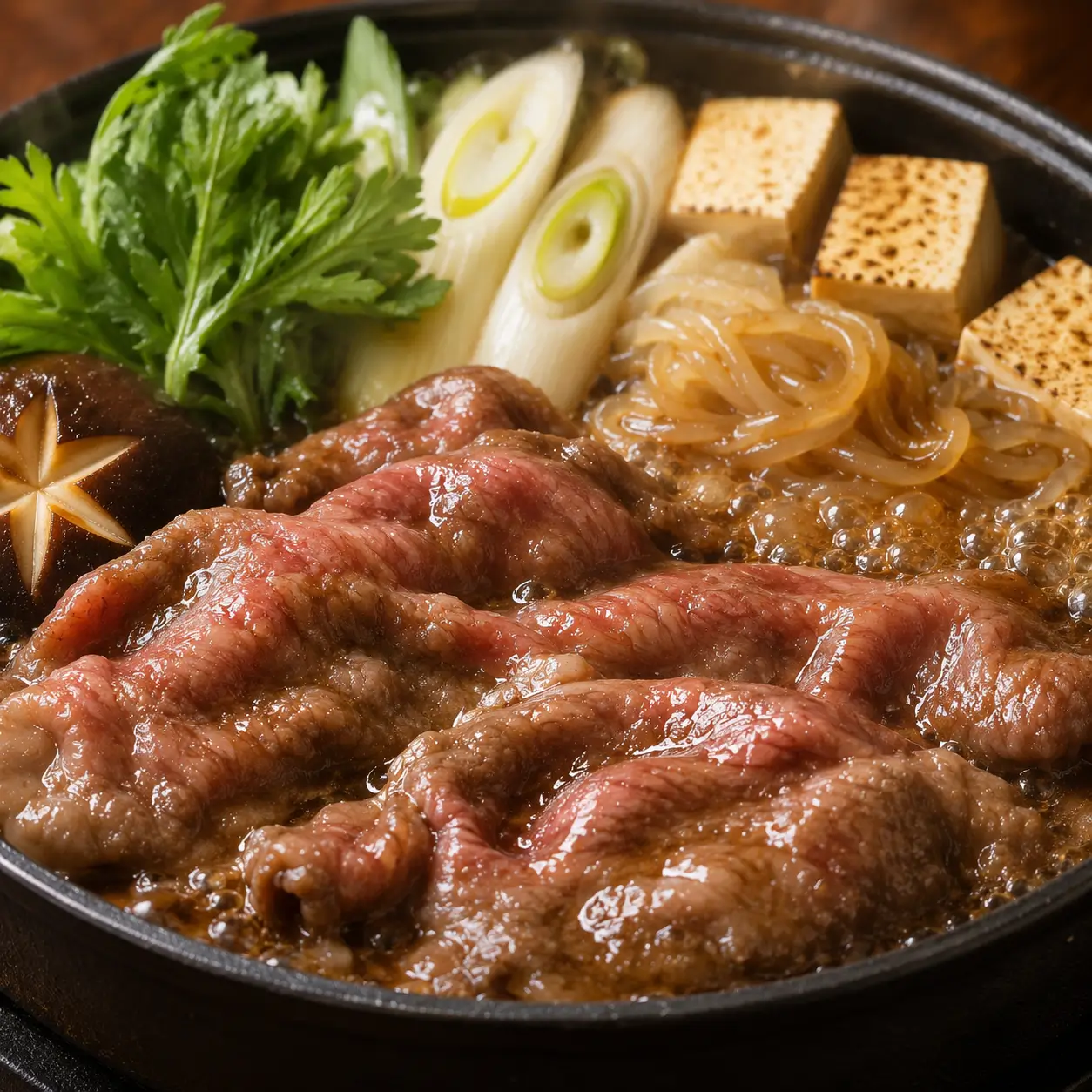
Sukiyaki is defined by the impeccable quality of its main component: paper-thin slices of high-grade, beautifully marbled Japanese beef (Wagyu). The beef is simmered in a shallow iron pot alongside a carefully curated ensemble of seasonal companions:
- Negi (Japanese Leeks): Thick, sweet leeks that caramelize beautifully.
- Shiitake and Enoki Mushrooms: Earthy elements that absorb the rich broth.
- Yaki-tofu: Firm, flame-seared tofu that retains its texture.
- Shirataki Noodles: Translucent, gelatinous yam noodles that provide a delightful chew.
The flavor profile is defined by Warishita (割り下), a robust, sophisticated simmering sauce brewed from premium soy sauce, sugar, mirin (sweet rice wine), and sake. The result is an intense, velvety sweet-and-savory broth. To balance this richness, each morsel is dipped into a bowl of freshly whisked, creamy raw egg immediately before consumption—a traditional technique that cools the food, tempers the sweet soy glaze, and imparts a silky, melt-in-your-mouth luxury.
The Forbidden Meat: Historical Origins and the Meiji Revolution
The evolution of Sukiyaki mirrors the dramatic modernization of Japan itself. For over a millennium, due to Buddhist philosophies and imperial decrees, the consumption of meat from four-legged animals was strictly forbidden in Japanese society. The name “Sukiyaki” originates from this clandestine era: Suki means “plowshare” (spade), and Yaki means “to grill.” Farmers secretly cooked wild game or strictly hidden meat outdoors, utilizing their iron farming tools over open fires away from the home temple.
The paradigm shifted dramatically during the Meiji Restoration in the late 19th century. When Emperor Meiji publicly consumed beef to promote Western modernization, a national boom ensued. Restaurants serving Gyunabe (beef hotpot)—the precursor to Sukiyaki—swept through Tokyo and Yokohama, transforming beef from a taboo substance into the ultimate symbol of enlightenment and sophisticated urban culture.
The Great Divide: Kanto vs. Kansai Style
As Sukiyaki spread across the nation, two distinctly different, fiercely defended culinary methodologies emerged, separated by Japan’s geographical regions:
1. Kanto Style (Eastern Japan / Tokyo Region)
The Kanto approach is structured and balanced. The seasoned *Warishita* broth is poured directly into the hotpot first and brought to a simmer. The beef, vegetables, and tofu are then added together and braised simultaneously. This method ensures all ingredients absorb the savory flavors equally and evenly.
2. Kansai Style (Western Japan / Kyoto & Osaka Region)
The Kansai approach is theatrical and focuses heavily on the initial sear. No pre-mixed liquid is used at first. Instead, the beef is seared directly in the dry, greased hotpot, coated with crystalline sugar, and splashed with soy sauce and sake at the table. Once the first luxurious slices of beef are eaten, vegetables are added, relying on their natural moisture to create a rich, concentrated reduction.
The Sacred Finale: Shime (締め)
In Japanese hotpot dining, the meal does not conclude when the initial ingredients disappear. The finale, known as Shime, represents the culmination of the entire dining experience. Over the course of the meal, the *Warishita* broth becomes deeply concentrated with the rendered fat of the Wagyu beef and the sweet juices of the caramelized leeks and mushrooms.
To honor this deeply flavorful essence, thick, chewy Udon noodles are added directly into the remaining broth at the very end. The noodles slowly absorb the rich, concentrated glaze, offering a comforting, carby finale that ensures not a single drop of the meal’s complex umami profile is wasted.
Sukiyaki on the Japanese Home Dining Table
Unlike everyday comfort foods, Sukiyaki occupies a highly revered status in Japanese households: it is the ultimate celebratory meal (Hare no Hi – ハレの日).
Because authentic Wagyu beef is an expensive luxury, Sukiyaki is rarely served on a casual weeknight. Instead, it is reserved for special family milestones: to toast a promotion, celebrate a birthday, welcome family members returning home, or mark the year-end holidays (Bonenkai).
Gathering around a single, bubbling electric or gas hotpot placed directly in the center of the dining table fosters a deeply intimate atmosphere. One family member usually assumes the role of the “Nabe-Bugyo” (Hotpot Captain), carefully managing the cooking times of each element. It is a meal designed to encourage slow eating, lively conversation, and shared joy, making Sukiyaki synonymous with warmth, prosperity, and family bonding in the Japanese subconscious.
“Sukiyaki perfectly encapsulates the Japanese art of communal dining. From its origins as a forbidden indulgence to its modern status as a celebratory centerpiece, it transforms prime ingredients into an unforgettable experience of shared warmth.”