While millions of international travelers flock to the crowded shrines of Kyoto and Tokyo, those seeking the true, untamed spiritual heart of Japan look north to the snow country of Niigata. Resting at the sacred base of Mount Yahiko, Yahiko Shrine (historically known as Iyahiko Jinja) has stood for over 2,400 years as the supreme guardian of the ancient Echigo region. This sanctuary seamlessly fuses deep Shinto mysticism with the raw, majestic power of Japanese mountain worship, offering an profound alternative for the discerning traveler.
The Cradle of Echigo: Shinto Mysticism and Imperial Heritage
Yahiko Shrine is dedicated to Ameno-kaguyama-no-mikoto, a great-grandson of the sun goddess Amaterasu. According to legend, this deity descended to the Echigo coast, taught the local people how to cultivate rice, fish, and extract salt from seawater, laying the foundation for Niigata’s modern identity as Japan’s premier rice and sake capital.
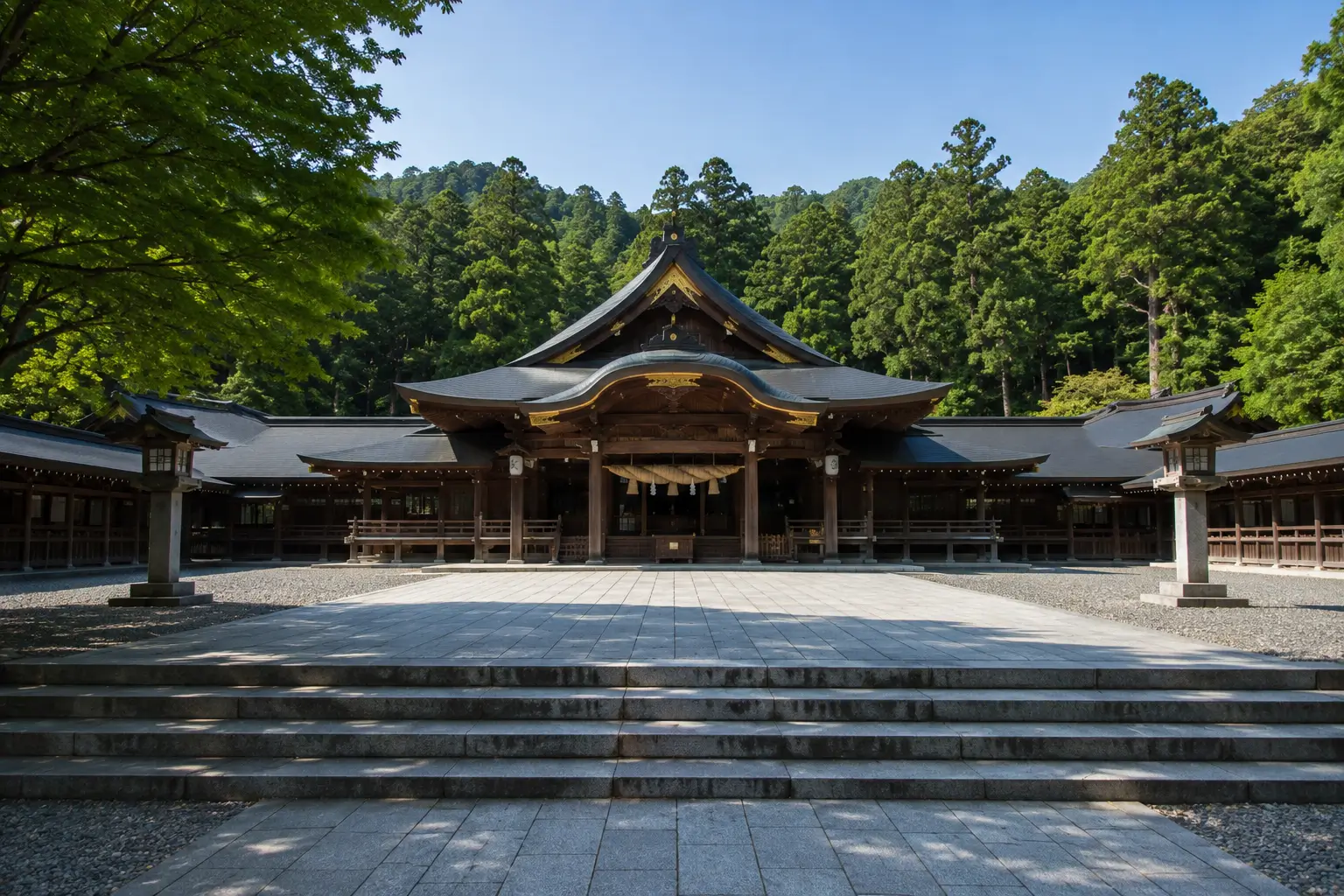
Because of this divine agricultural heritage, the shrine has enjoyed centuries of profound reverence, heavily patronized by legendary samurai warlords, imperial courtiers, and modern pilgrims. The energy here is not one of ostentatious display, but of deep, quiet authority. The main shrine structures, rebuilt in 1916 in the classical Nagare-zukuri style, harmonize flawlessly with the ancient topography of the mountain behind them.
Where Gods Dwell in Nature: The Sacred Forest and Mount Yahiko
To enter the grounds of Yahiko Shrine is to step through a veil into a primeval world. The approach (Sando) is guarded by a massive, vermilion wooden Torii gate. Uniquely, its main pillars float slightly above the ground on stone pedestals—a traditional structural defense against the decay caused by Niigata’s legendary heavy winter snows.
Walking the stone path, visitors are enveloped by a forest of towering Japanese cedars (Sugi) and ancient maples, some over 400 to 500 years old. The air here is noticeably cooler and sharper, carrying the scent of moss, mountain water, and incense. Directly behind the main hall rises Mount Yahiko (634 meters), the sacred body of the deity itself. Travelers can ascend to the summit via a nearby ropeway or a hiking trail to visit the Okunomiya (the inner sanctuary), which commands panoramic views over the vast Echigo plains on one side and the dramatic Sado Island across the Sea of Japan on the other.
Access Information
Yahiko Shrine is located in Yahiko Village, Niigata Prefecture. While it offers a complete escape into nature, it can be comfortably accessed via Japan’s efficient rail and bus network. Utilizing the Shinkansen (Bullet Train) makes it an excellent overnight trip from Tokyo.
| Transportation Mode | Route & Instructions |
|---|---|
| By Train (From Tokyo / Niigata) | Take the Joetsu Shinkansen from Tokyo Station to Tsubame-Sanjo Station (approx. 1 hour 50 mins). From Tsubame-Sanjo, transfer to the local JR Yahiko Line and ride to the terminal station, Yahiko Station (approx. 30 mins). The shrine entrance is a scenic, flat 15-minute walk from Yahiko Station through the traditional village. |
| By Taxi / Local Bus | If traveling from nearby Tsubame-Sanjo Station or local hot spring areas (Onsen), a Taxi offers a direct, private route through the rural landscape (approx. 25–30 minutes). Local community buses also run periodically depending on the season. |
Traveler’s Note: The region surrounding Yahiko Shrine is famous for Yahiko Onsen (hot springs). To truly experience the hospitality of rural Japan away from urban overcrowding, we highly recommend staying overnight at a local traditional inn (Ryokan) and visiting the shrine at dawn, when the morning mist hangs beautifully over the forest.
Shrine Etiquette: The Bow and Clap Ritual
When entering this ancient spiritual site, performing the correct Shinto ritual deepens your connection to the space and demonstrates respect to the local heritage:
- The Torii Bow: Pause and bow slightly before passing under the grand Torii gate, acknowledging that you are entering the domain of the spirits.
- The Purification (Temizuya): At the water pavilion, rinse your left hand, then your right hand, and lightly rinse your mouth using water from the wooden ladle. Do not drink directly from the ladle.
- The 2-2-1 Devotion: At the altar, bow deeply twice (a 90-degree angle), clap your hands sharply twice to greet the deity, keep your hands together to offer a silent prayer, and finish with one final deep bow.
The True Soul of Japan Awaits
Yahiko Shrine represents the architectural majesty and natural reverence that forms the absolute foundation of Japanese culture. By stepping away from the standardized tourist itineraries and journeying to the ancient forests of Niigata, travelers unlock a deeply authentic, meditative side of Japan—a sacred space where the whispers of the wind through the giant cedars have remained unchanged for millennia.