
Published: May 2026 | Category: Culinary Heritage & Culture
While international travelers often associate Japanese gastronomy strictly with raw fish or delicate broths, one of the nation’s most enduring culinary triumphs is a dish built on contrast: crispy, golden-brown crust on the outside, and incredibly succulent meat on the inside. This is Tonkatsu (豚カツ). To understand Tonkatsu is to understand how Japan adopts global concepts, refines them with microscopic precision, and weaves them into the fabric of daily life.
Ingredients and Flavor Profile: What Makes It Sublime?
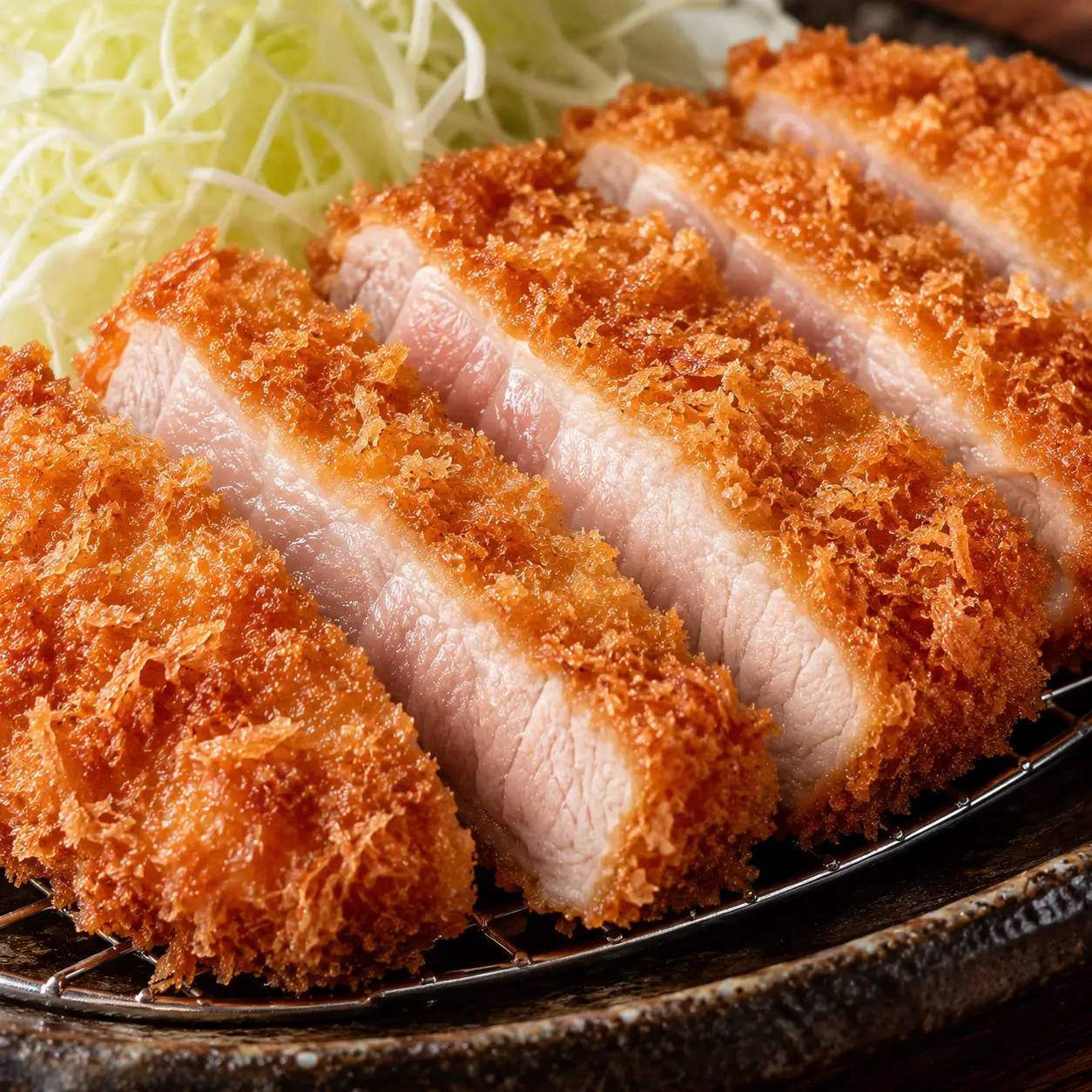
At its core, Tonkatsu consists of a thick slice of high-quality pork, lightly dredged in flour, dipped in beaten egg, and coated in Panko (パン粉)—fluffy, airy Japanese breadcrumbs made from crustless white bread. The cutlet is then deep-fried in pure vegetable oil or refined lard until it reaches a deep amber hue.
The flavor profile is a masterful balance of savory richness and clean textures. Unlike European schnitzels, which are thin and pan-fried, Tonkatsu is thick-cut. The rapid deep-frying process vaporizes the moisture in the Panko, creating an exceptionally light, shattered-glass crunch. Meanwhile, the interior is essentially steamed within its own jacket of dough, retaining the pork’s natural juices, mild sweetness, and rich, umami depth.
The Birthplace and Historical Evolution
The birthplace of Tonkatsu is Tokyo, emerging during the late 19th-century Meiji Restoration—a period when Japan actively embraced Western culture after centuries of isolation. It evolved from a French classic, côtelette de veau (veal cutlet). Because veal was scarce and butter-frying felt overly heavy to the Japanese palate, innovative chefs in Tokyo made a series of brilliant adaptations:
- They substituted veal with more readily available, flavorful pork.
- They replaced fine European breadcrumbs with coarse, fresh Panko.
- They adapted deep-frying techniques from traditional Tempura, allowing the meat to cook evenly without absorbing excess grease.
By 1929, a restaurant in Tokyo’s Ueno district served the cutlet pre-sliced (so it could be eaten easily with chopsticks) alongside white rice, cabbage, and miso soup. This marked the definitive transition from a Western novelty into a fully integrated Japanese dish.
The Main Varieties
When ordering Tonkatsu, you will primarily encounter two distinct premium cuts of pork, each offering a completely different dining experience:
1. Rosu-Katsu (ロースカツ) — Pork Loin
This cut is preferred by connoisseurs who appreciate rich flavors. It features a beautiful ribbon of top-tier fat running along the edge. As it fries, the fat melts into the meat, rendering it incredibly juicy, deeply savory, and intensely flavorful.
2. Hire-Katsu (ヒレカツ) — Pork Tenderloin
This is a lean, premium cut taken from the most tender part of the pork. It contains virtually no fat, presenting an elegant, clean flavor profile. It is so remarkably tender that it can easily be cut with the side of a chopstick, making it highly popular among health-conscious diners.
The Sacred Geometry of the Tonkatsu Set
Authentic Tonkatsu is rarely served in isolation; it is almost universally presented as a complete, harmonious set meal (Teishoku) featuring two essential side dishes:
- A Mountain of Shredded Cabbage: The plate will always feature a generous serving of raw cabbage, shaved into impossibly fine, feather-light ribbons. This is not a mere garnish. The crisp, refreshing cabbage cleanses the palate between bites of rich pork and provides vitamin U, which naturally aids in the digestion of oils.
- A Hot Bowl of Miso Soup: To complete the meal, a savory miso soup is served. Frequently, specialty shops serve Tonjiru—a rustic miso soup simmered with pork trimmings, root vegetables, and ginger—which beautifully mirrors and complements the main dish.
Condiments: How to Customize Your Flavor
Half the joy of eating Tonkatsu lies in tailoring each bite using the condiments provided at the table:
| Condiment | The Flavor Impact |
|---|---|
| Tonkatsu Sauce | A thick, dark, dark-brown sauce made from a reduction of apples, tomatoes, prunes, onions, and spices. It is tangy, sweet, and deeply savory. |
| Karashi (Japanese Mustard) | A vibrant, pale yellow mustard paste with a sharp, nasal heat. Dabbing a tiny amount directly onto a sauced cutlet cuts through the oil brilliantly. |
| Sea Salt | Highly favored for high-grade pork. A light sprinkle of rock salt enhances the natural, delicate sweetness of the meat without softening the Panko crust. |
Tonkatsu on the Japanese Home Dining Table
How is Tonkatsu viewed by Japanese families? It occupies a fascinating, dual position: it is both a familiar, comforting staple and a celebratory meal.
Because deep-frying at home requires significant preparation and cleanup, Tonkatsu is treated as a highly anticipated dinner treat. It appears on family menus frequently—often multiple times a month—either made from scratch by parents or purchased fresh from local neighborhood deli counters (惣菜屋) to be reheated for a quick, delicious weeknight meal.
Crucially, Tonkatsu holds a powerful cultural status as a lucky food. In the Japanese language, the word “Katsu” sounds exactly like the verb “to win” (勝つ). Because of this auspicious homophone, it is an absolute tradition for parents to serve Tonkatsu to their children the night before a major school entrance exam, or for individuals to eat it before an important job interview or sports match, transforming a simple comfort food into a delicious ritual of support and encouragement.
“Tonkatsu is more than a dish; it is a cultural anchor. From its historical roots as a symbol of international modernization to its contemporary role as a comforting home-cooked meal packed with wishes of victory, it represents the heart of Japanese comfort food.”