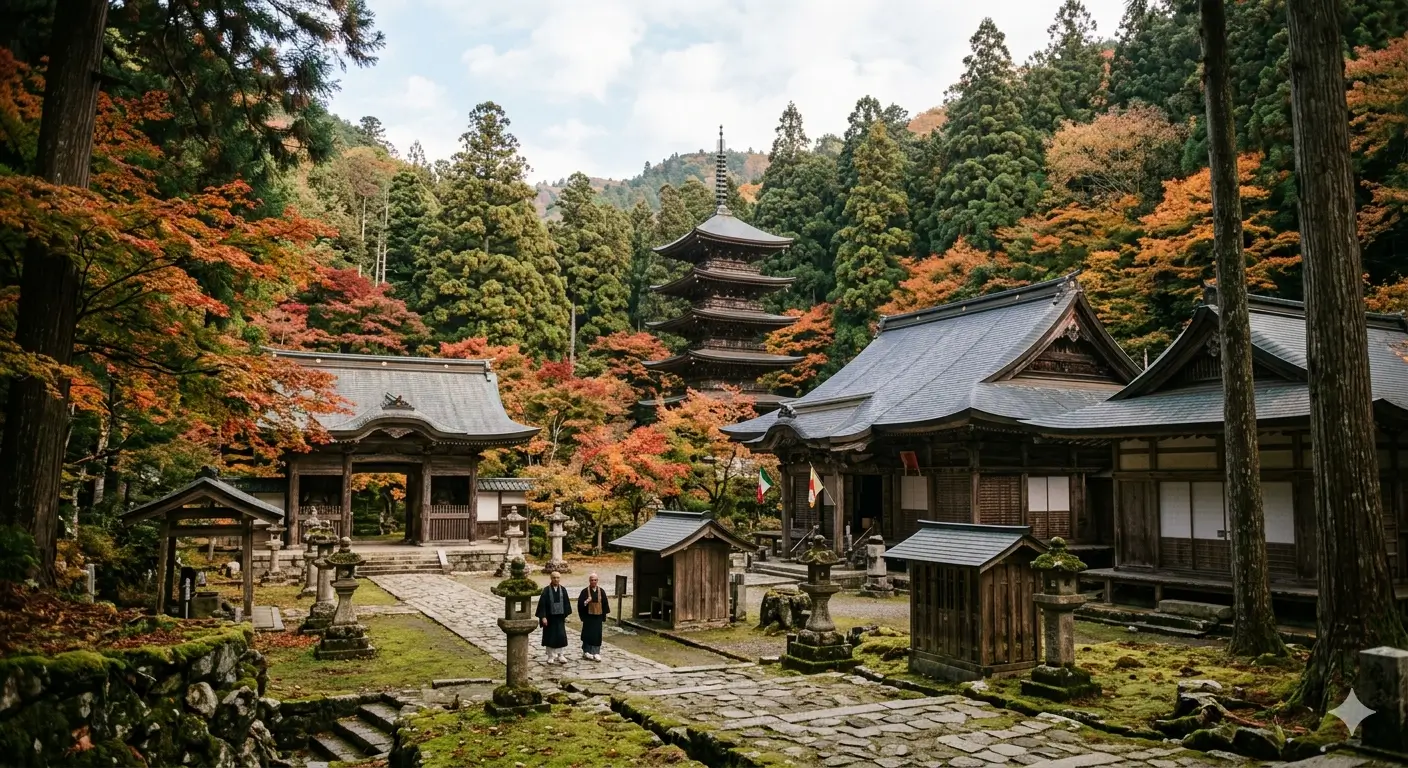
While Shinto shrines embody Japan’s indigenous spirituality rooted in nature, Buddhist temples (Odera or Jiin) represent a profound philosophical journey introduced from the Asian continent. For centuries, Buddhism has shaped Japanese art, architecture, and the collective mindset, offering paths to inner peace, mindfulness, and enlightenment. Exploring lesser-known regional temples allows travelers to escape the bustling tourist centers and immerse themselves in stunning, contemplative landscapes where ancient rituals are still practiced as part of daily life.
The Soul of Japanese Buddhism: A Path to Mindfulness
Buddhism officially arrived in Japan in the 6th century, introducing a structured philosophy focused on overcoming suffering and achieving enlightenment. Unlike shrines, which honor the natural divine spirits (Kami), temples are centered around the teachings of the Buddha and house sacred Buddhist statues (Butzo), each representing different aspects of compassion, wisdom, and protection.
Hidden regional temples often serve as the physical and cultural anchors of their communities. The architectural layout—featuring grand main halls (Hondo), towering pagodas, and meticulously raked rock gardens—is designed to reflect the Buddhist cosmos. Walking through these secluded grounds, visitors can feel the transition from worldly distractions to a space dedicated to deep self-reflection and absolute tranquility.
Temple Etiquette: Rituals of Respect and Mindfulness
Visiting a Buddhist temple involves distinctive rituals that differ slightly from Shinto practices. Observing these traditional steps shows respect for the monastic community and enhances your personal connection to the spiritual space.
- Passing the Temple Gate (Sanmon): The main gate represents the boundary between the mundane world and the sacred path to enlightenment. Bow slightly with your hands placed together before stepping over the raised threshold (avoid stepping directly on the wooden beam).
- Incense Purification (Jokoro): Many temples feature a large bronze incense burner in front of the main hall. If incense is burning, gently wave the aromatic smoke toward yourself using your hands. This ritual is believed to purify the mind, heal ailments, and bring wisdom before entering the sacred hall.
- The Praying Ritual (No Clapping): At the main altar, gently drop a coin into the offering box. If a bell is present, ring it only if permitted. Bow deeply, place your palms together at chest level in a silent prayer (Gassho), and remain still. Crucially, do not clap your hands at a temple, as clapping is a ritual unique to Shinto shrines. Conclude with a final respectful bow.
The Spiritual Table: The Philosophy of Shojin Ryori
The culinary identity of Japan is deeply intertwined with Buddhist philosophy. The most authentic expression of this connection is Shojin Ryori, the traditional vegetarian cooking developed by Buddhist monks, which reflects the core values of compassion and mindfulness.
What is Shojin Ryori? (Ingredients and Flavor Profile)
Shojin Ryori is a completely plant-based cuisine. It strictly excludes meat, fish, and seafood, as well as the “Five Pungent Roots” (such as garlic, onions, and leeks) which are believed to disrupt spiritual focus. The primary ingredients consist of seasonal vegetables, wild mountain plants, seeds, and soybean products like tofu, yuba (tofu skin), and natto. The flavor profile is remarkably subtle and delicate, designed to bring out the natural, intrinsic taste of each raw ingredient. Chefs rely on a natural broth (Dashi) made from dried kombu kelp and shiitake mushrooms, seasoned lightly with traditional soy sauce, miso, and sake.
Origins and Domestic Role
The roots of Shojin Ryori trace back to Zen Buddhism, which flourished during the Kamakura period (13th century). The principles were popularized by Zen masters who taught that the preparation and consumption of food are just as spiritually significant as seated meditation. Over time, these sophisticated vegetarian techniques heavily influenced everyday Japanese home cooking. Today, elements of Shojin Ryori are integrated into the domestic table; for instance, the practice of serving a balanced meal consisting of “one soup and three sides” (Ichiju-sansai) stems from this monastic tradition. It is both a regular dietary option for health-conscious families and a specialized cuisine prepared for auspicious family gatherings or memorial services.
How to Enjoy Shojin Ryori and Cultural Etiquette
When exploring the areas surrounding hidden temples, you can often find historic teahouses or sub-temples (Shukubo) that offer Shojin Ryori luncheons to travelers. It is traditionally served on beautiful lacquerware trays with multiple small dishes, emphasizing visual harmony. When enjoying this spiritual meal, it is essential to observe the etiquette of gratitude. Before eating, join your hands and say “Itadakimasu” (I humbly receive), acknowledging the lives of the plants and the effort of the cook. It is polite to finish everything on your plate without waste, as wasting food contradicts the Buddhist principle of appreciating all resources. Finally, avoid leaving your chopsticks sticking vertically into a bowl of rice, as this mirrors a funeral ritual.
Discover Hidden Buddhist Sanctuaries
Beyond the famous landmarks, Japan’s countryside is dotted with thousands of serene temples nestled in misty valleys, surrounded by ancient moss, or overlooking quiet rural villages. In our sub-categories below, we introduce specific, off-the-beaten-path temples across various regions. Each guide features essential transportation details, including local train routes, connecting buses, and reliable taxi options. Step into a world of timeless contemplation and discover the profound tranquility of Japan’s hidden sanctuaries.